
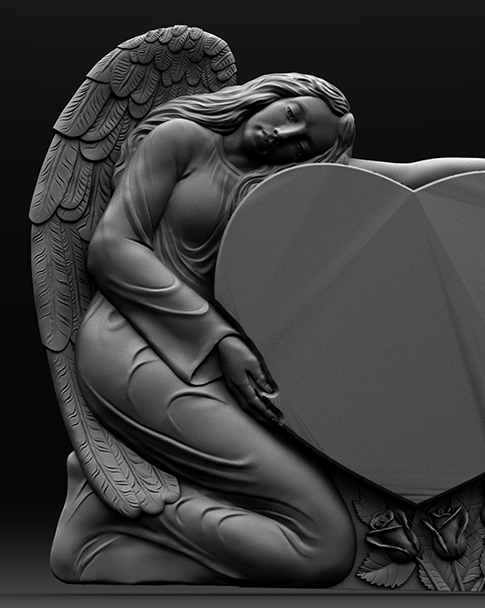

1. Why Does Z-Axis Travel Matter in 3D Stone Carving?
When choosing a CNC stone carving machine, buyers often focus on the working area, spindle power, and number of axes. However, one important specification is sometimes overlooked: Z-axis travel.
The Z-axis controls the vertical movement of the spindle or carving head. It determines how far the tool can move up and down during machining.
For 3D stone carving, sufficient Z-axis travel is important because stone products come in different thicknesses, shapes, and heights.
For example:
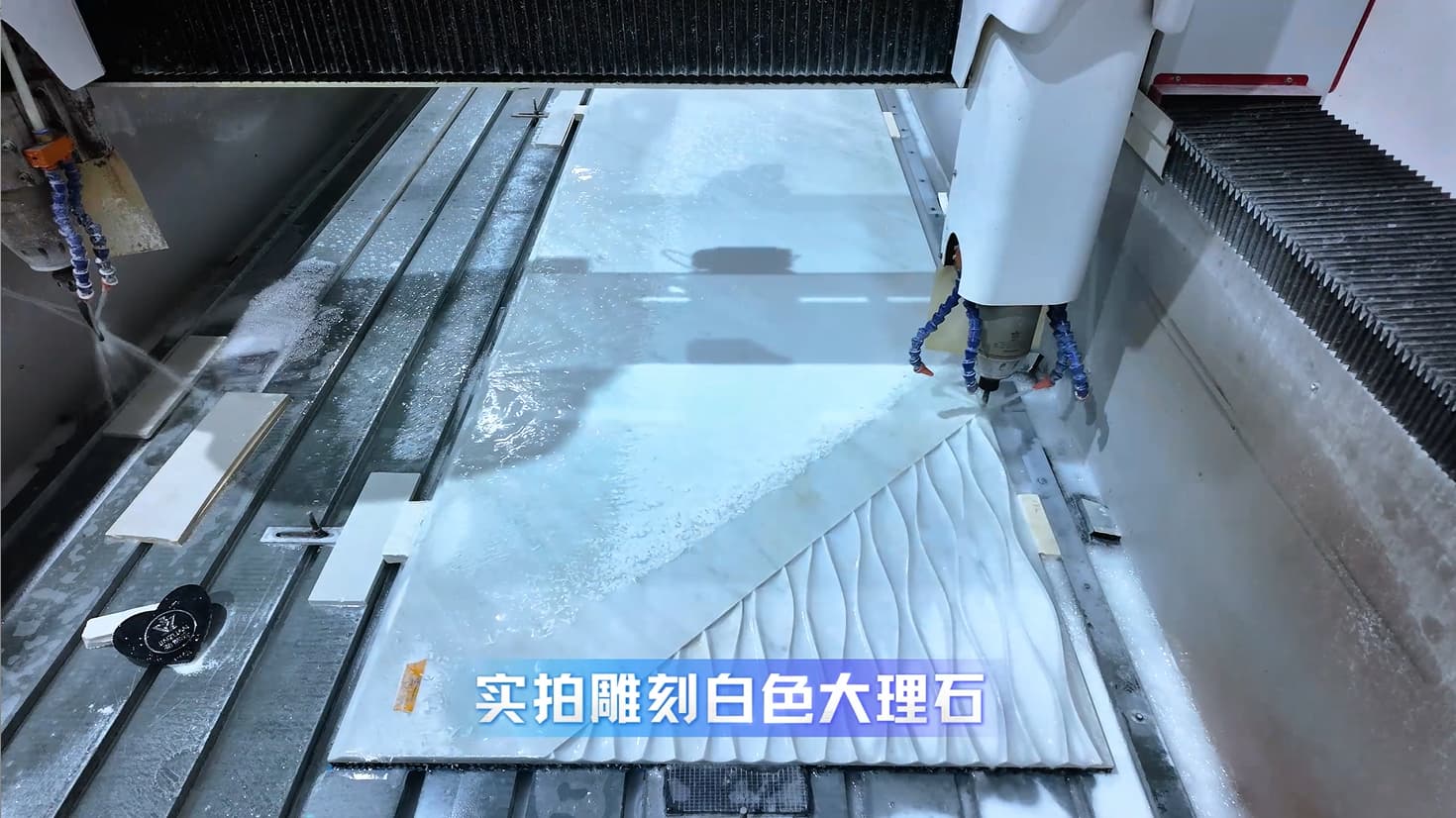
- Flat stone reliefs: A relatively short Z-axis travel may be sufficient for shallow patterns and decorative wall panels.
- Deep relief carving: More vertical movement is needed to machine deeper details and complex surface contours.
- 3D sculptures: The machine needs enough vertical travel to reach different heights and machine curved surfaces.
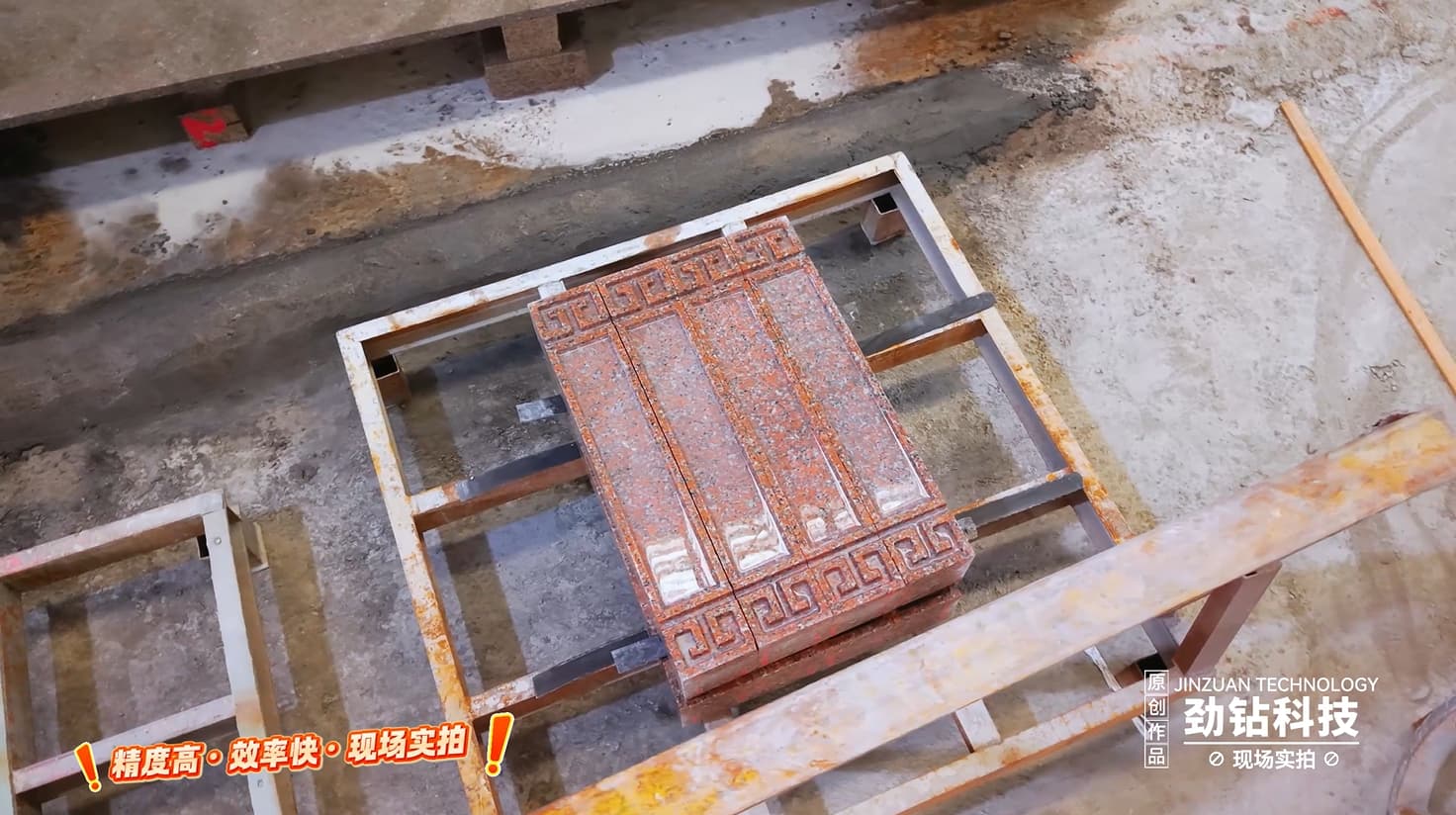
- Stone columns and pillars: Extra Z-axis clearance may be necessary when processing tall or irregularly shaped workpieces.
A machine designed for flat engraving may not be suitable for customers who regularly process thick stone blocks or three-dimensional sculptures. Therefore, choosing the right Z-axis travel should start with your actual stone products, not simply the largest specification available.
2. How to Calculate the Z-Axis Travel You Need
One common misunderstanding is that Z-axis travel is the same as the maximum stone thickness a machine can process. These are not necessarily the same.
When selecting a CNC stone carving machine, you should consider several dimensions:
1. Workpiece thickness: The vertical height of the stone block or slab.
2. Tool length: The distance from the spindle holder to the cutting tip.
3. Machining depth: The vertical range required by the carving design.
4. Safety clearance: Additional space needed for tool movement, positioning, and tool changes.
A useful preliminary calculation is: Required Z-axis travel ≈ Workpiece thickness + Additional machining clearance
However, this is only a preliminary selection method. The actual usable machining height also depends on the machine structure, spindle position, tool length, fixture height, and the manufacturer's definition of Z-axis travel.
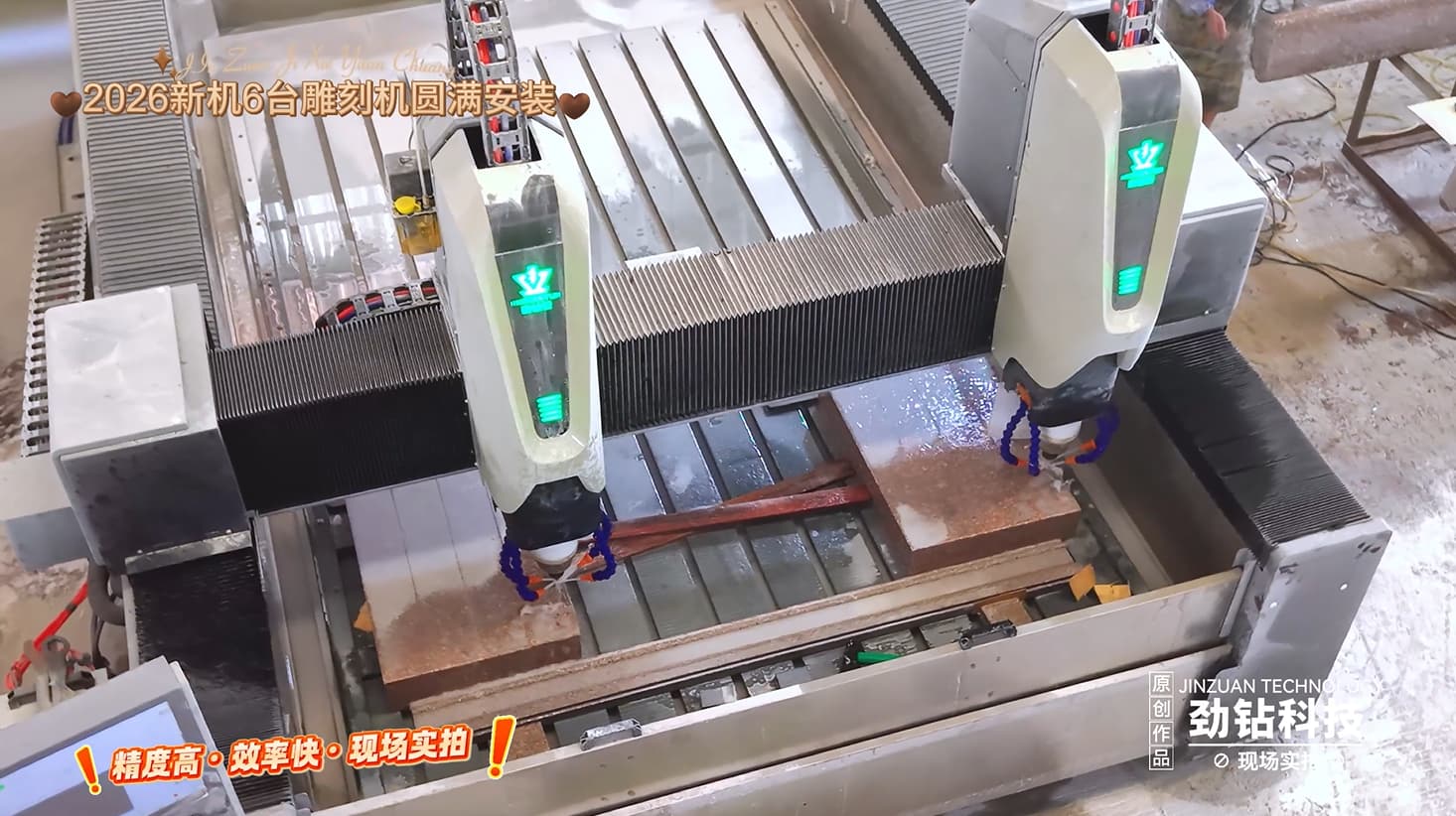
For example, if you regularly process 250mm-thick stone blocks, you should not automatically select a machine with only 250mm of Z-axis travel. You also need to check whether the spindle can reach the required machining positions without interference.
Important: Ask the manufacturer to confirm the maximum workpiece height, effective machining depth, and available tool clearance separately.
 |
 |
3. What Z-Axis Travel Is Suitable for Different Stone Carving Applications?
Different stone products require different machine configurations. The following table provides a practical starting point for equipment selection.
|
Stone Carving Application |
Key Requirement |
Selection Consideration |
|---|---|---|
|
2D Engraving |
Shallow engraving and lettering |
Standard Z-axis configuration |
|
Bas-Relief Carving |
Detailed surface patterns |
Adequate vertical movement for relief depth |
|
Deep Relief Carving |
Deeper patterns and layered details |
Greater Z-axis range and suitable spindle clearance |
|
3D Sculpture |
Complex curved surfaces and different heights |
Higher Z-axis travel and multi-axis machining capability |
|
Roman Columns |
Tall and curved stone workpieces |
Z-axis clearance and optional rotary axis |
|
Large Stone Statues |
Thick blocks and complex three-dimensional shapes |
Extended Z-axis travel and sufficient structural clearance |
There is no universal Z-axis specification for all applications. A machine that works well for decorative panels may not provide enough clearance for large sculptures. The most suitable configuration is the one that accommodates your actual workpiece dimensions and machining requirements.
4. 400mm vs. 600mm Z-Axis Travel: Which Should You Choose?
For stone carving machine buyers, 400mm and 600mm are two useful configurations to compare when evaluating machining height requirements.
400mm Z-Axis Travel:A 400mm configuration can be suitable for many conventional stone carving applications, including:
- Decorative wall panels and stone reliefs.
- Lettering, floral patterns, and architectural ornaments.
- General-purpose 3D stone carving.
- Stone components with moderate thickness.
It is a practical option for workshops whose main production involves standard-sized stone products.
600mm Z-Axis Travel:A 600mm configuration provides additional vertical travel and can offer more flexibility for demanding applications, such as:
- Deeper 3D carving projects.
- Larger stone sculptures.
- Thick stone blocks and architectural components.
- Projects requiring greater vertical machining range.
For customers who frequently change between different workpiece heights, a larger Z-axis configuration can reduce equipment limitations.
|
Comparison |
400mm Configuration |
600mm Configuration |
|---|---|---|
|
Z-axis travel |
400mm |
600mm |
|
Typical application |
General stone carving |
More demanding carving applications |
|
Workpiece requirements |
Moderate height |
Greater vertical range |
|
Application flexibility |
Standard production |
More flexible for varied workpieces |
|
Selection priority |
Conventional carving tasks |
Larger or taller workpieces |
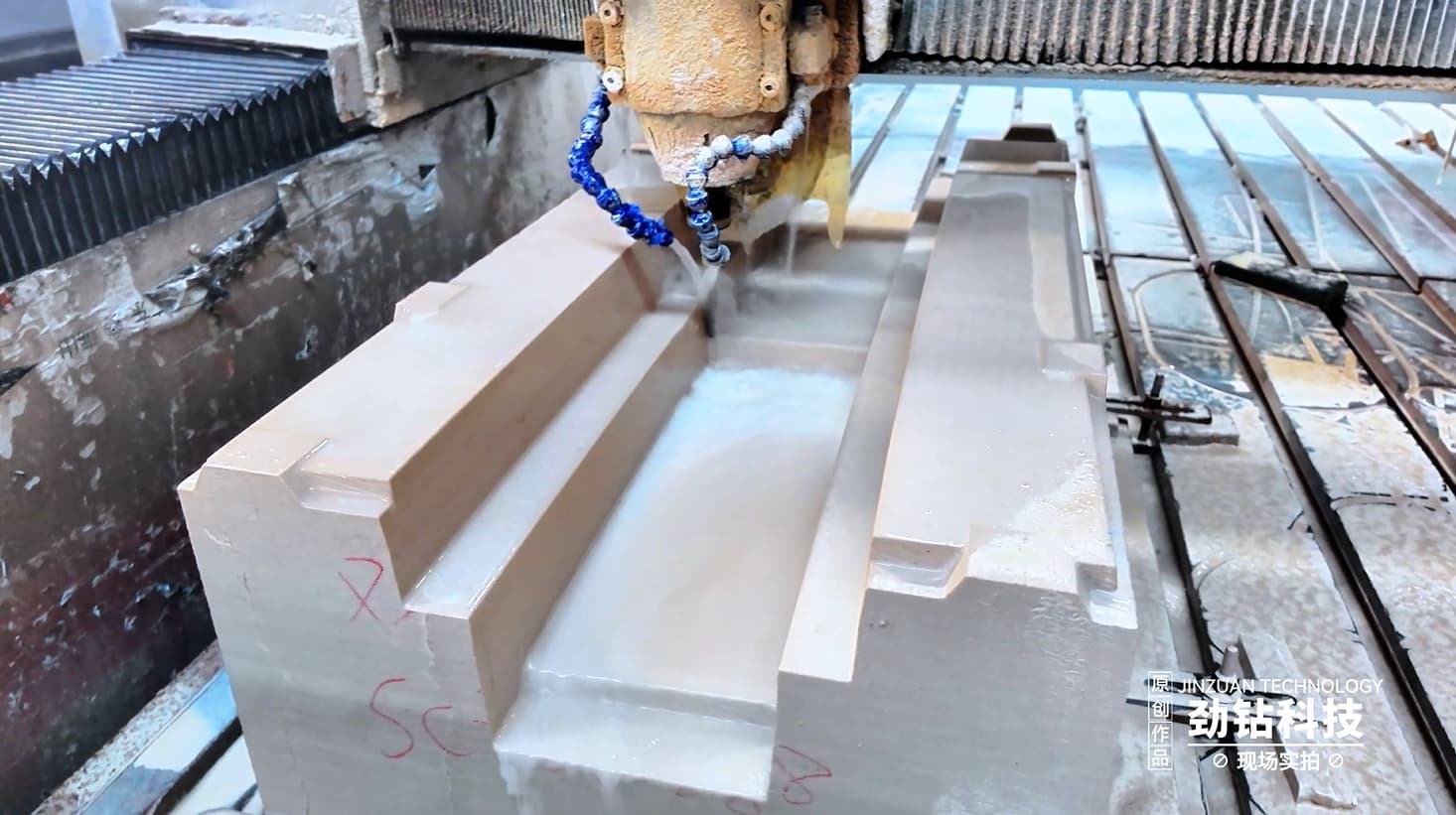
JINZUAN Machine Configuration Example:we offer customized stone carving machine configurations according to customers' production requirements.
For example, some customized machines supplied to our Croatian customers featured:
- Model configurations: 1515T-1D, 2515T-1D, and 3015T-1D.
- Spindle power: 11kW.
- Z-axis travel: 600mm.
Compared with the regular 7.5kW spindle and 400mm Z-axis configuration, these machines were customized for customers who needed additional spindle power and vertical travel when processing thicker stone materials.
This is a practical example of why machine configuration should be matched to the customer's actual production requirements rather than selected by price alone.
 |
 |
5. Does More Z-Axis Travel Always Mean a Better Machine?
Not necessarily. A larger Z-axis travel provides more vertical movement, but it does not automatically guarantee better carving quality or higher machining accuracy. There are several factors buyers should evaluate together.
1. Machine Rigidity
A machine designed for extended Z-axis movement must maintain sufficient structural rigidity. The column, guide rails, transmission system, and spindle support all affect machining stability.
2. Spindle Power
Different stone materials and carving processes require different cutting conditions. A higher-power spindle may be useful for demanding rough machining, but spindle power should match the tools and applications.
3. Axis Accuracy
Check the positioning accuracy, repeatability, transmission structure, and actual machining results. A larger travel range alone does not indicate higher precision.
4. Tool Clearance
The spindle must have enough clearance to reach the required machining positions. Tool length and workpiece fixtures should also be considered.
5. Actual Workpiece Size
If your production mainly involves thin decorative panels, purchasing an oversized machine may increase equipment costs without providing meaningful benefits.
The goal is not to purchase the machine with the largest Z-axis travel. It is to find a machine that offers the right combination of travel, rigidity, spindle performance, and working area.
6. How to Choose the Right CNC Stone Carving Machine?
Before requesting a quotation, prepare the following information for your supplier:
- Stone Material: Granite, marble, sandstone, or other materials.
- Maximum Workpiece Thickness: The thickest stone block you plan to process.
- Product Dimensions: Length, width, and height of the finished products.
- Carving Requirements: 2D engraving, bas-relief, deep relief, or full 3D sculpture.
- Machining Details: Required carving depth, tool type, and processing method.
- Production Volume: Occasional customized orders or continuous factory production.
Providing these details allows the manufacturer to recommend a more suitable machine structure and Z-axis configuration.
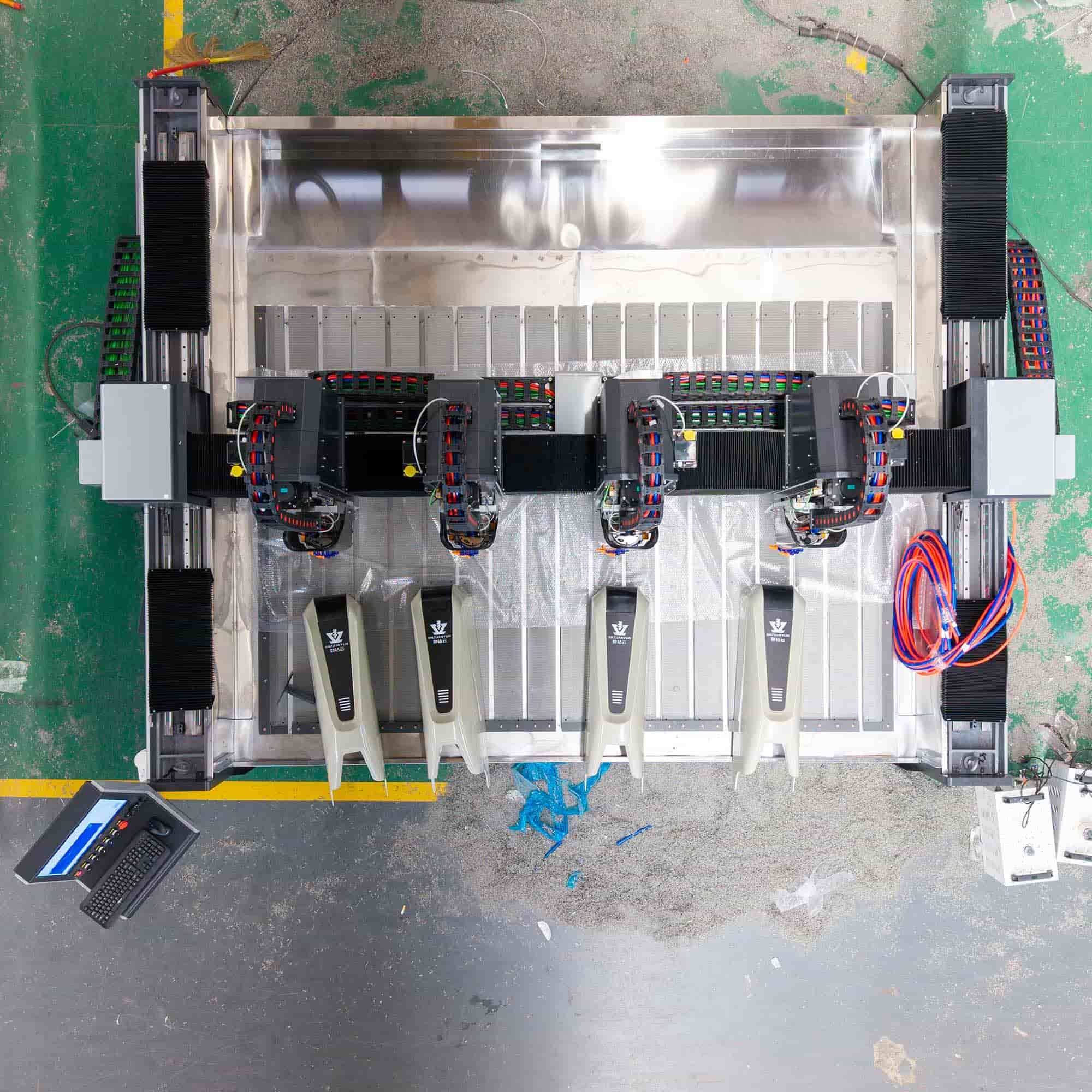
At JINZUAN, we focus on CNC stone carving machinery, offering different working areas, spindle configurations, and axis arrangements to accommodate diverse stone processing requirements. Whether you manufacture decorative stone panels, carved furniture components, architectural ornaments, or three-dimensional sculptures, the machine should be configured around your actual production needs.
7. Frequently Asked Questions (FAQ)
Q1: What is a good Z-axis travel for a CNC stone carving machine?
There is no single ideal value. A 400mm configuration can meet many conventional stone carving requirements, while a 600mm configuration provides more vertical travel for demanding applications. The right choice depends on workpiece height, tool clearance, and machining requirements.
Q2: Is 400mm Z-axis travel enough for 3D stone carving?
It can be sufficient for many 3D carving projects involving moderate-sized stone workpieces. However, larger sculptures and thick stone blocks may require additional vertical travel.
Q3: Does 600mm Z-axis travel mean the machine can carve 600mm-thick stone?
Not necessarily. Z-axis travel and maximum workpiece thickness are different specifications. Actual processing capacity depends on the machine's structural clearance, spindle position, tool length, and fixture arrangement.
Q4: Can I customize the Z-axis travel of a stone carving machine?
Yes. Depending on the machine structure and technical requirements, manufacturers may offer customized Z-axis configurations. JINZUAN can discuss extended Z-axis options based on your workpiece dimensions and applications.
Q5: Should I choose a 3-axis or 5-axis stone carving machine for 3D sculptures?
A 3-axis machine is suitable for many conventional carving tasks where machining can be completed through X, Y, and Z movements. A 5-axis machine offers additional tool orientation flexibility, making it useful for complex curved surfaces, angled machining, and more complicated three-dimensional designs.
Conclusion: Choose Z-Axis Travel Based on Your Real Production Needs
Z-axis travel is an important specification when purchasing a CNC stone carving machine, especially for workshops processing thick stone blocks, deep reliefs, and three-dimensional sculptures.
A 400mm configuration may be sufficient for many conventional applications, while a 600mm configuration offers additional vertical movement for more demanding projects.
However, buyers should also evaluate machine rigidity, spindle power, effective machining height, and the dimensions of their actual stone products.
Looking for a CNC stone carving machine with the right Z-axis travel?
Contact Quanzhou Jinzuan Technology Co., Ltd. (JINZUAN) and send us your stone product drawings, workpiece dimensions, and carving requirements. Our team can help you evaluate the appropriate machine configuration for your production.
JINZUAN – Your Professional Stone Carving Machine Manufacturer.
оставить сообщение
Сканировать в Wechat :

Сканировать в WhatsApp :








 Поддерживается сеть IPv6